 Stool Log
How to keep a stool diary your doctor can use
A stool diary is a short note each time you go: when, what it looked like, and anything that came with it. Two weeks of notes tell a doctor more than anything you can remember on the day.
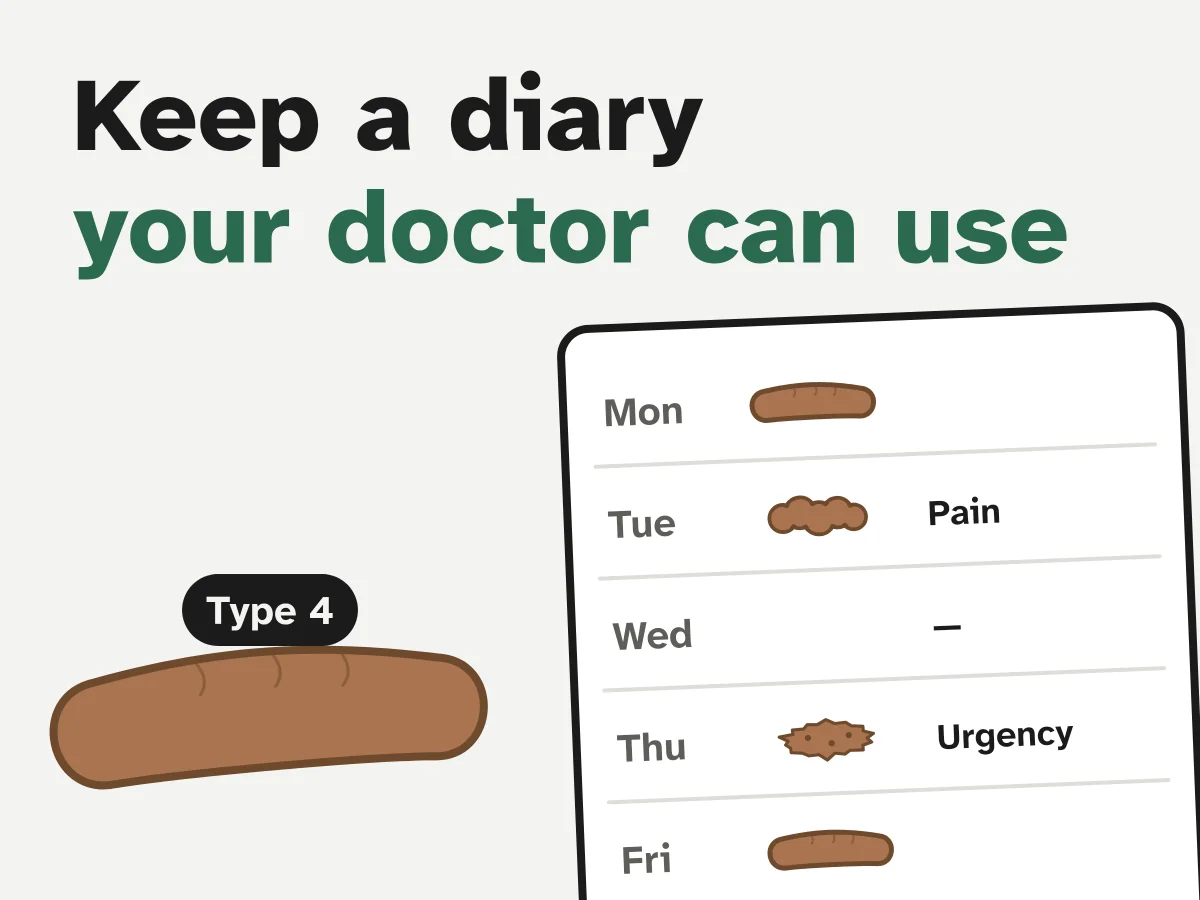
Why keep a stool diary?
Most of us can't say how many times we went last week, let alone whether the stools were harder on Tuesday. When a doctor asks "how often?" or "since when?", a diary turns a guess into an answer. US health experts suggest tracking your bowel movements and what your stools look like before a doctor's visit, so you can share it.1
It also helps you. Patterns that are hard to notice day to day, such as harder stools on days you drank little, start to show after a week or two.2
What do you write in a stool diary each time?
Keep each note short. These are the parts doctors and nurses ask about most:
- Date and time. The time shows your rhythm: when you usually go, and how long the gaps are.
- The Bristol type, 1 to 7. The Bristol stool chart sorts stools into seven types by shape and consistency, from separate hard lumps (type 1) to watery (type 7).3 A number is quicker to write and easier to compare than a description. Why stools come out hard or loose explains what the types say.
- Anything unusual about it. Blood, mucus, a colour that isn't brown, or a very bad smell. The stool colour chart shows which colours to mention.
- How it went. Straining, pain, needing to go urgently, or feeling you hadn't finished.2
- Minutes on the toilet, if you sat for a long time.
A few lines of a diary can look like this:
| Date and time | Type | How it went | Other notes |
|---|---|---|---|
| Mon 7:40 AM | 4 | Fine | |
| Tue | Didn't go | ||
| Wed 8:15 AM | 2 | Strained, 15 min | Little water on Tuesday |
| Wed 9:30 PM | 6 | Urgent | Takeaway curry |
What else is worth noting?
You don't need to write everything you eat. Note the things you or your doctor want to check:
- Foods you suspect, such as dairy, spicy food or a big meal late at night.
- Water and other drinks, especially if you're working on drinking more.
- Medicines and supplements, with the dose and time, including laxatives, iron and fibre.
- Symptoms on their own: bloating, cramps, nausea, wind.
- Days you didn't go at all. Write "didn't go" so a blank day isn't mistaken for a forgotten one.
How many weeks should a stool diary cover?
Keep it for several days or weeks before your appointment.1 Two weeks is a good start: long enough to show your usual pattern, short enough to keep up. If you're trying a change, such as a new medicine or more fibre, keep going for a similar stretch before and after so you can compare like with like.
Diaries for a particular reason
The basics above work for everyone. Some reasons add a few things worth noting:
- IBS: foods and symptoms side by side; see the IBS food and symptom diary and the low FODMAP diet diary.
- Crohn's or colitis: see the flare diary.
- A GLP-1 medicine: your doses and dose changes; see tracking constipation on a GLP-1 medicine.
- A child: see keeping a poop diary for your child.
- A parent or someone you care for: see bowel tracking for someone with dementia and bowel charts in care homes.
How do you make a stool diary easy to keep up?
The diaries that work are the ones that take seconds. A few habits help:
- Log right after you go, not at the end of the day.
- Keep the diary where you'll see it: the bathroom, your phone's Home Screen, or a printed sheet on the back of the door.
- Set one evening reminder for days you forgot.
- Don't aim for perfect. A missed note is fine; a pattern still shows.
If you prefer paper, print our one-week stool diary. It has a row for each visit with space for the type, pain and notes.
How do you use a stool diary at the appointment?
A doctor has a few minutes, so a summary helps more than pages of notes. Before you go, count:
- How many stools a week, on average.
- How many were hard and how many loose, by type.
- The longest gap between stools.
- Anything that worried you, with its date.
Then bring the diary itself in case they want detail. Our guide to preparing for a GI appointment covers what else to bring, and questions to ask a gastroenterologist has questions to take with you.
Common questions
How long should I keep a stool diary?
US health experts suggest tracking your bowel movements for several days or weeks before a doctor's visit.1 Two weeks is a good start: long enough to show your usual pattern.
What should a stool diary include?
When you went, the Bristol type (1 to 7, by shape and consistency),3 anything unusual such as blood or mucus, and how it went, including straining or pain.2 Add the days you didn't go.
Do I need to write down everything I eat?
No. Note only the foods, drinks and medicines you or your doctor want to check, such as how much you drink if you're working on drinking more.2
Is there anything I shouldn't wait to report?
Yes. Blood in your poo, which may look red or black, is a reason to see a GP,4 and black or dark red poo needs an urgent appointment or NHS 111.4
Keep it on your iPhone instead
Stool Log keeps the same diary in a tap, from the app, a widget or your Apple Watch, and turns your last 14 days into a free report to print or share.

Sources
- NIDDK (National Institutes of Health). Diagnosis of constipation, 2018. ↩ a b c
- NHS. Constipation, 2023. ↩ a b c d
- Cleveland Clinic. Bristol Stool Chart: Types & What They Mean, 2026. ↩ a b
- NHS. Symptoms of bowel cancer, 2026. ↩ a b c d
This article is general information, not medical advice. Talk to a doctor or nurse about your own symptoms.
Read next
 Bowel charts in care homes and home care: what they record and how families can follow alongWhat a bowel or stool chart in a care home or home care records, why it's kept every day, how a family can follow it, and how to take it to the GP.
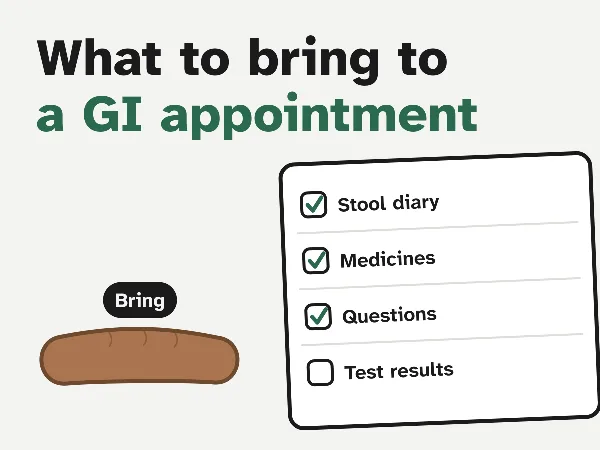 What to bring to a gastroenterologist appointmentA checklist for a GI or bowel appointment: your stool diary, medicines, history and the questions to ask, so you leave with answers.
 Stool and poop colour chartA stool color chart: what brown, green, yellow, orange, black, red and pale or grey poop can mean, which colours to show a doctor, and a free printable.
 How often should you poop?How many bowel movements a day or week are common, why your own pattern matters more than a number, and when a change is worth a doctor's visit.