 Stool Log
Tracking constipation on a GLP-1 medicine
Constipation, nausea and diarrhoea are listed among the common side effects of GLP-1 medicines such as semaglutide (Ozempic, Wegovy) and tirzepatide (Mounjaro, Zepbound). A short diary shows your prescriber what is happening, and when.

Why does a diary help on a GLP-1 medicine?
A diary helps because constipation, diarrhoea, nausea and vomiting are among the most common side effects in the labels of GLP-1 medicines, and their timing is the useful part to show your prescriber.12 These medicines reduce your appetite and slow digestion, and both can change your bowel habits.3 In trials of tirzepatide (Zepbound), most nausea, vomiting and diarrhoea came while the dose was being raised, and eased over time.4
"I've been constipated" is hard to act on. "Since my dose went up three weeks ago I've gone twice a week, mostly type 1 and 2" gives your prescriber something to work with.
What should you log on a GLP-1 medicine?
A medicine diary needs only a few things you can note in seconds:
- Each stool, with its Bristol type. The Bristol stool chart gives you the numbers. Types 1 and 2 are hard; 6 and 7 are loose. Why stools come out hard or loose explains what the types say.
- Days you didn't go. On a medicine that slows things down, the gaps are the story.
- Your dose and the day you take it. Note any change of dose with its date.
- Water. Being sick or having diarrhoea makes dehydration more likely, and drinking regularly lowers the risk.5
- Fibre and meals, roughly: a serving of vegetables, fruit, beans or whole grains, or a skipped meal.
- Symptoms: nausea, bloating, cramps, reflux, or no appetite.
- Laxatives or fibre supplements you take, with the dose.
How do you read your own pattern?
To read your own pattern, look for these after two or three weeks:
- How many stools a week now, compared with before you started.
- Whether hard stools cluster in the days after your dose.
- Whether the days with more water or fibre look different.
- The longest gap between stools.
You're not looking for a cause on your own. You're collecting what your prescriber will ask about.
What should you bring to your prescriber?
Bring your weekly numbers and the dates of any dose change to your prescriber. Ask what they'd like you to do if constipation continues, and whether any laxative or supplement is right for you. Don't change, skip or stop doses on your own: talk to your prescriber first.3
The labels also list rare reports of a blocked bowel and severe constipation since these medicines came on the market.1 Mention any big change in how you go.
How do you keep a GLP-1 diary easy?
A reminder on your dose day and a quick note after each stool are enough to keep a medicine diary going. A once-a-week injection is easy to forget to write down, and so is water. If you'd rather use paper, our printable stool diary has room for a week.
A diary that knows your medicine
In Stool Log you can find Ozempic, Wegovy, Mounjaro or Zepbound by name, log each dose, and keep your stools, water and food in the same diary. The free report shows your last 14 days on one page.

Sources
- US Food and Drug Administration (via DailyMed). Wegovy (semaglutide) prescribing information, 2026. ↩ a b c
- NHS. Tirzepatide: a medicine to manage type 2 diabetes and treat obesity, 2026. ↩ a b
- NHS. Semaglutide: a medicine to manage type 2 diabetes or treat obesity, 2026. ↩ a b
- US Food and Drug Administration (via DailyMed). Zepbound (tirzepatide) prescribing information, 2026. ↩
- NHS. Dehydration, 2026. ↩ a b
- NHS. Constipation, 2023. ↩ a b
This article is general information, not medical advice. Talk to a doctor or nurse about your own symptoms.
Read next
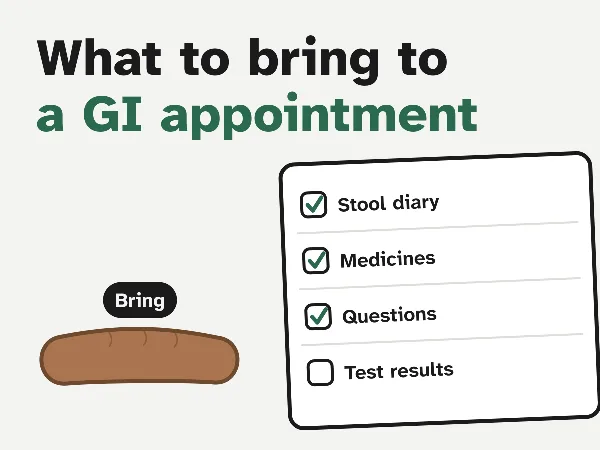 What to bring to a gastroenterologist appointmentA checklist for a GI or bowel appointment: your stool diary, medicines, history and the questions to ask, so you leave with answers.
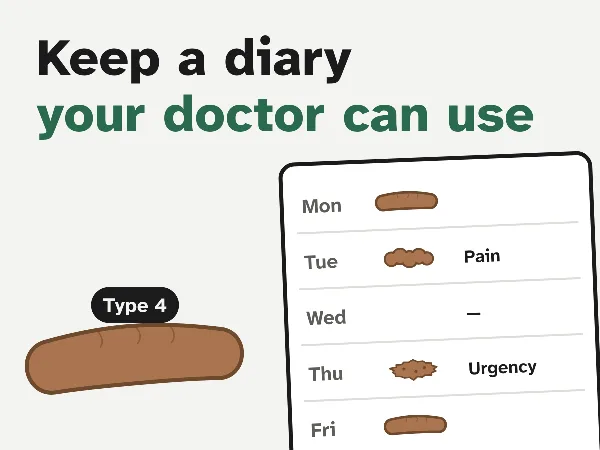 How to keep a stool diary your doctor can useWhat to write down each time you go, for how long, and how to bring it to an appointment so your doctor can read it in a minute.
 How often should you poop?How many bowel movements a day or week are common, why your own pattern matters more than a number, and when a change is worth a doctor's visit.