 Stool Log
Keeping a poop diary for your child
Our son has eczema, and along with it came constipation. Keeping track of how often he went, what he ate and how he felt was the only way we could answer the doctor's questions. Here's what we learned.
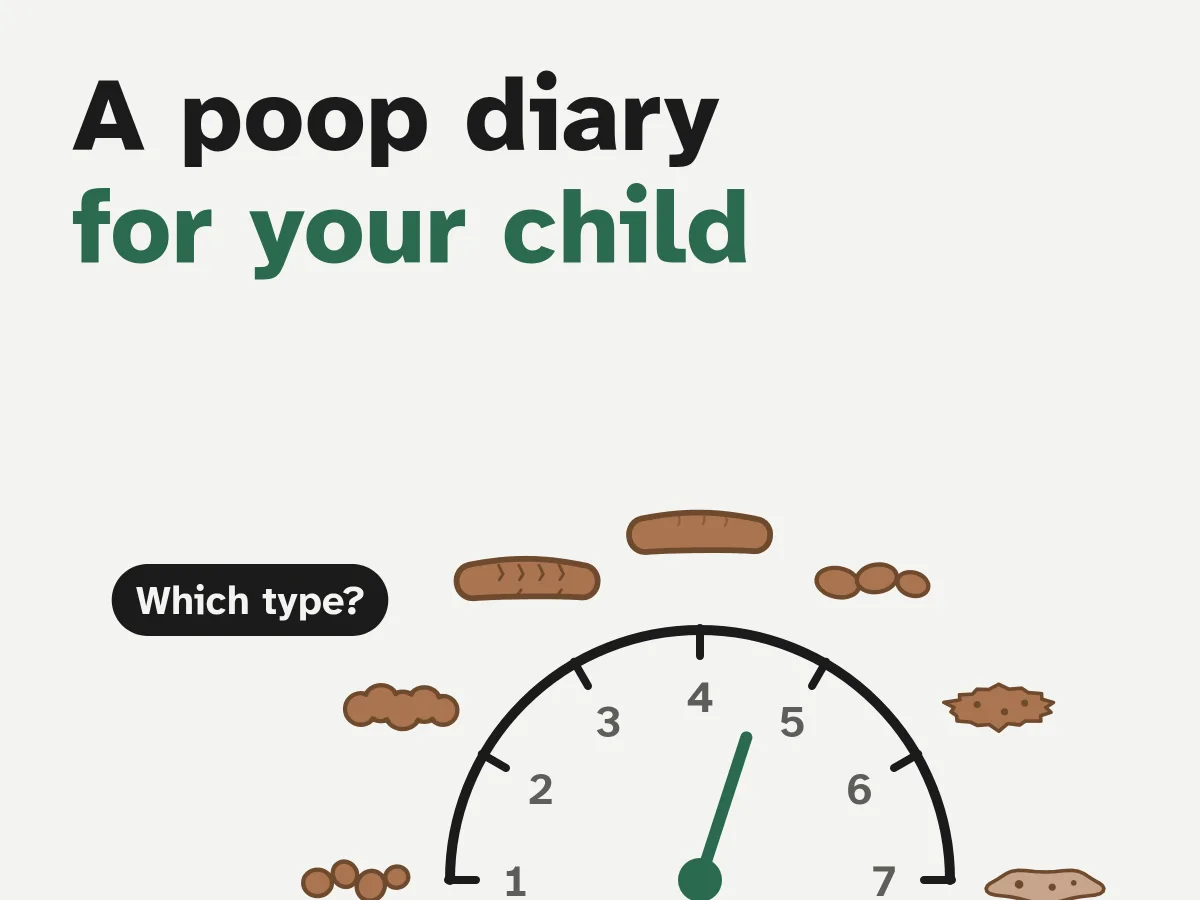
Why keep a poop diary for a child?
Children often can't say when they last went, and parents only see some of it, especially once a child goes to nursery or school. It's also easy to remember only the bad days.
A diary of a week or two answers the questions the doctor will ask: how often, how hard, does it hurt, and since when. NICE, which writes guidance for doctors in England, includes keeping and talking through a bowel diary in the support it suggests for children with constipation.1
What goes in a child's poop diary?
The NHS says a child may be constipated if they have done fewer than 3 poos in the last week, their poo is large and hard or looks like "rabbit droppings", or they strain or are in pain when they poo.2 A diary shows each of these.
- When they went. Date and roughly what time.
- What it looked like, using the Bristol stool chart. Older children can point to the picture, and our poo chart for kids names the types in words they can use; for younger ones, check yourself. The stool colour chart covers colour, with a section on children.
- Whether it hurt or they strained, cried, or held it in.
- Accidents and soiling. In a child who is already potty-trained, soiling is usually because they are badly constipated,3 so it's worth writing down.
- Days with no poop. Write "didn't go" so the gap shows.
- Drinks and foods you're keeping an eye on, such as milk, or fruit and vegetables.
- Medicines, with the dose and time, if the doctor has given any.
A few days of notes can look like this:
| Day | Poos | Type | Hurt or strained? | Notes |
|---|---|---|---|---|
| Mon | 0 | Didn't go | ||
| Tue | 1 | 1 (hard lumps) | Yes, cried | Big glass of milk at bedtime |
| Wed | 0 | Didn't go | ||
| Thu | 1 | 2 | Strained | Small mark in pants after school |
Those four days show 2 poos, both hard, with straining and a mark in the pants: three of the signs the NHS lists,23 and the kind of record a GP can read in a minute.
How do you get a child to help with the diary?
- Keep it light. A chart with stickers works for some children (ours prints on one page); others don't need to know there is a diary at all. Encouragement and rewards are part of the support NICE describes.1
- Never make it a test. Feeling pressured while potty or toilet training is one of the possible causes of constipation the NHS lists.2
- Use the same words every time. "Was it lumpy or smooth?" is easier than asking about shapes.
- Let older children log their own, with you checking now and then.
What changes by age?
- Babies: how often they poo changes a lot in the first months; see how often a baby should poo and constipation when starting solids.
- Toddlers: holding on often starts with potty training; see toddler constipation during potty training.
- School age: see constipation in school-age children, soiling, and how to talk to children about poo without shame.
When more than one adult is involved
If both parents, a grandparent or a carer look after your child, agree on one diary. A shared paper sheet on the fridge works, and so does an app everyone can reach.
What do you show the doctor?
Count the poops a week, how many were hard, and how often it hurt. Mention any change in eating or drinking, and anything new, such as starting nursery or school or toilet training: the NHS lists not eating enough fibre, not drinking enough, pressure during toilet training and worry about things like starting school among the possible causes.2 Our guide to preparing for a GI appointment has more.
A note from us
We're parents, not doctors, and every child is different. What helped us most was having the record in hand at appointments instead of trying to remember. If you'd rather keep it on paper, our printable stool diary works for children too.
Common questions
How long should I keep a poop diary for my child?
A week or two is usually enough to show the pattern a doctor will ask about: how often, how hard, whether it hurts and since when. NICE includes keeping and talking through a bowel diary in the support it suggests for children with constipation.1
How many poos a week is too few for a child?
The NHS says a child may be constipated if they have done fewer than 3 poos in the last week, or if their poo is large and hard, looks like "rabbit droppings", or they strain or are in pain.2
Should I write down accidents?
Yes. In a child who is already potty-trained, soiling is usually because they are badly constipated,3 so it belongs in the diary, and regular soiling is a reason to see a GP.3
Should my child know about the diary?
That's up to you. A sticker chart works for some children, but never make it a test: feeling pressured while toilet training is one of the possible causes of constipation the NHS lists.2
A separate diary for your child
Stool Log keeps a diary for your child apart from your own, so a tap from the Home Screen widget is all it takes after each poop. The free report gives the doctor the last 14 days on one page.

Sources
This article is general information, not medical advice. Talk to a doctor or nurse about your own symptoms.
Read next
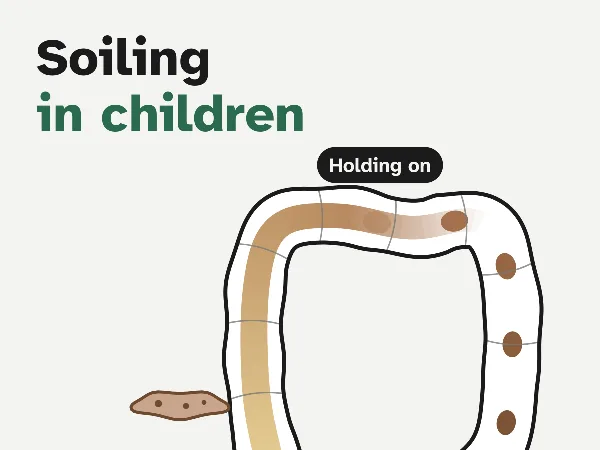 Soiling in children (encopresis): why it happens and what helpsSoiling, or encopresis, is usually from constipation, not naughtiness. Why children poo their pants, what helps at home, and when to see a GP.
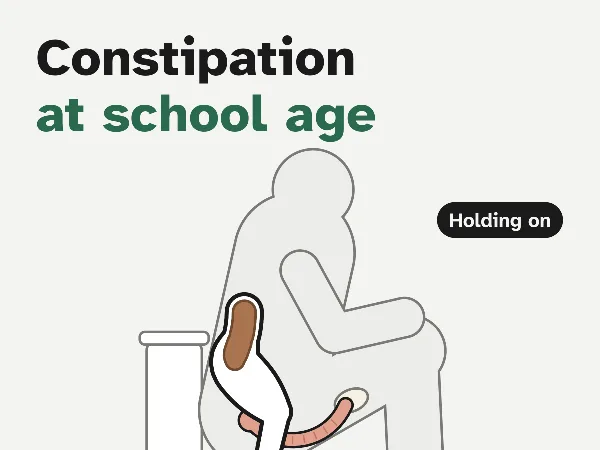 Constipation in school-age children: holding on, signs and what helpsWhy school-age children get constipated, often from holding on and avoiding school toilets, the signs to look for, what helps and when to see a GP.
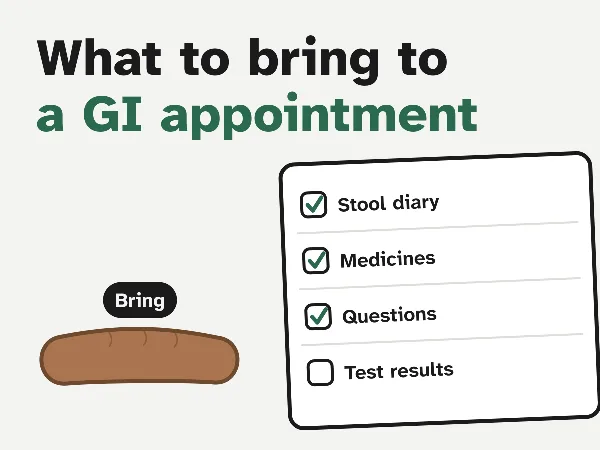 What to bring to a gastroenterologist appointmentA checklist for a GI or bowel appointment: your stool diary, medicines, history and the questions to ask, so you leave with answers.
 Stool and poop colour chartA stool color chart: what brown, green, yellow, orange, black, red and pale or grey poop can mean, which colours to show a doctor, and a free printable.
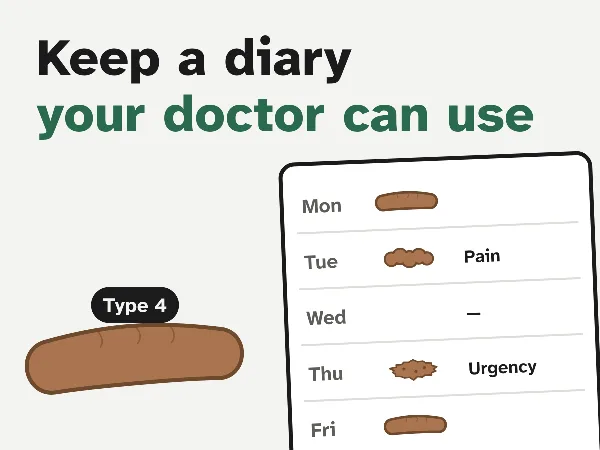 How to keep a stool diary your doctor can useWhat to write down each time you go, for how long, and how to bring it to an appointment so your doctor can read it in a minute.