 Stool Log
How often should you poop?
For adults, anywhere from three times a day to once every three days is seen as normal. What matters more than the number is what's usual for you, and whether that changes.
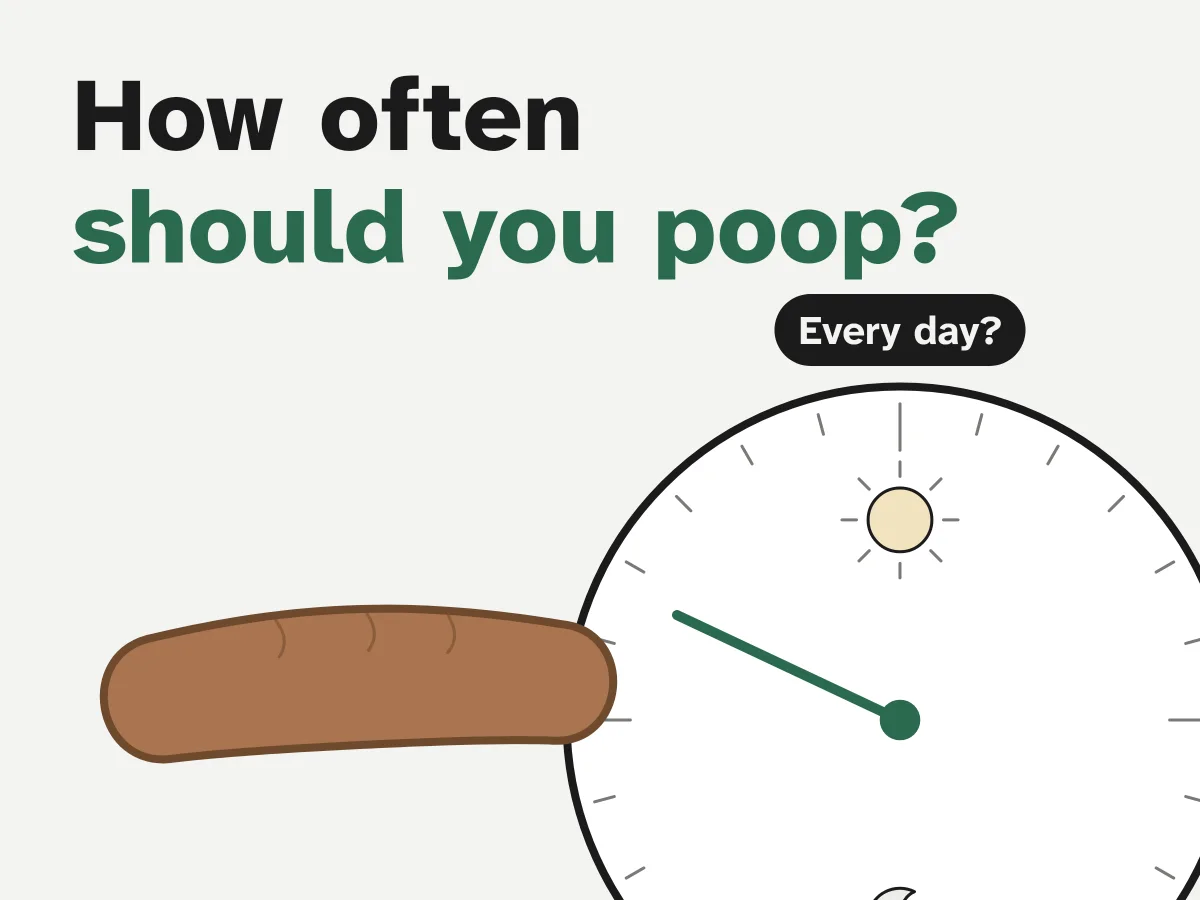
How often should you poop, at a glance?
For adults, the usual range is 3 times a day to once every 3 days, and a change from your own pattern matters most.12
| What the sources say | |
|---|---|
| Usual range for adults | 3 times a day to once every 3 days1 |
| A sign of constipation | Fewer than 3 poos in the last week, or less often than usual for you3 |
| What matters most | A change from your own pattern2 |
| Babies and children | Different: see how often a baby should poo |
Is there a right number of poos a day?
There is no single right number of poos a day: for adults, anywhere from three bowel movements a day to one every three days is seen as normal.1 Some people go at the same time every morning; others vary from day to day.
Not having a poo at least 3 times in the last week is one of the signs of constipation, along with dry, hard or lumpy poo, straining, and feeling you haven't fully emptied your bowels.3
Why does your own pattern matter more than a number?
People have different bowel patterns, and only you know what's normal for you.2 If you've gone once every two days all your life and feel fine, that's your normal. If you've always gone daily and now go less often than usual, that change is worth noticing, even if the new number is still within the range above.3
If you're not sure whether what you have counts, the Am I constipated? checklist goes through the signs one by one, and how long can you go without pooping? covers when a long gap becomes a reason to get help.
That's why keeping a short stool diary for a couple of weeks is useful: it shows your own baseline, so a change stands out.
What changes how often you poop?
The most common causes of constipation, and of going less often, are everyday ones:3
- What you eat. Not eating enough fibre, from fruit, vegetables and cereals. Our fibre checker adds up a day's food against the NHS amount for your age.
- What you drink. Not drinking enough fluids.
- Moving. Not moving enough, and long periods sitting or lying down.
- Routine. Changing your diet or daily routine, and often ignoring the urge to go.
- Medicines. Some medicines cause constipation as a side effect, such as opioid painkillers.3 See our guide on constipation on GLP-1 medicines.
- Pregnancy. Constipation is common during pregnancy and after giving birth.
- Stress. Stress, anxiety or depression.
Does how firm your poop is matter too?
How firm your poop is matters too: dry, hard or lumpy poo is one of the signs of constipation, even if you go often.3 How often is only half of it. The Bristol stool chart sorts stools into seven types, from separate hard lumps to watery. Why stools come out hard or loose explains what the types say, what a healthy poop looks like puts shape, colour and frequency together, and the stool colour chart covers colour.
The numbers here are for adults. For babies and children, ask your doctor what to expect. Our guide for parents covers keeping a poop diary for your child.
Common questions
Is it bad not to poop every day?
Not on its own. For adults, anywhere from three times a day to once every three days is seen as normal.1 What's worth noticing is a change from what's usual for you.2
Is pooping three times a day normal?
It can be. Three bowel movements a day is at the top of the usual range for adults.1 If it's new for you, or the stools are loose or watery, note it and see how long it lasts.
How many times a week counts as constipation?
The NHS lists not having a poo at least 3 times in the last week, or pooing less often than usual, as one of the signs, along with dry, hard or lumpy poo, straining and feeling you haven't fully emptied your bowels.3
When should I see a doctor about how often I go?
See a GP if you notice sudden changes in how you poo, if constipation isn't getting better with treatment, or if you have tummy pain, blood in your poo or weight loss you can't explain.3
Watch the Short · 35 seconds on YouTubeDo you need to poop every day?Find your own normal
Stool Log counts your stools a week and shows your usual time of day on its free Insights tab, so you can see your pattern and notice when it changes.

Sources
This article is general information, not medical advice. Talk to a doctor or nurse about your own symptoms.
Read next
 How much fibre a day? Grams, foods and your stoolsAdults are advised to have 30 g of fibre a day, but most eat about 20 g. What 30 g looks like, how fibre changes your stools and why to add it slowly.
 What does a healthy poop look like?What a healthy poop looks like: Bristol types 3 and 4, a shade of brown, easy to pass, 3 a day to 1 every 3 days, and when to see a doctor.
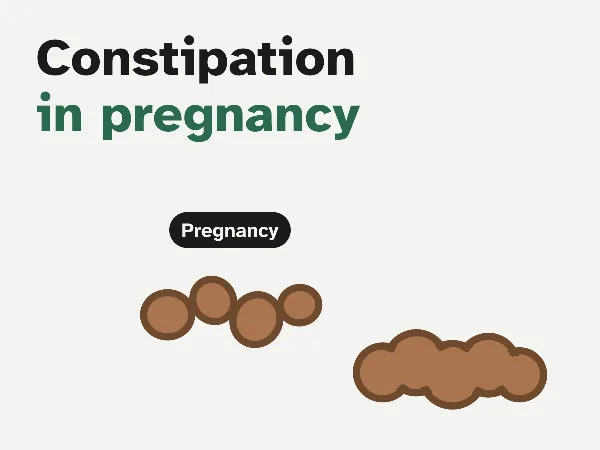 Constipation in pregnancy: why it happens and what can helpConstipation is common in pregnancy, from hormones, iron tablets and a growing bump. Why it happens, what can help, and when to call your midwife or GP.
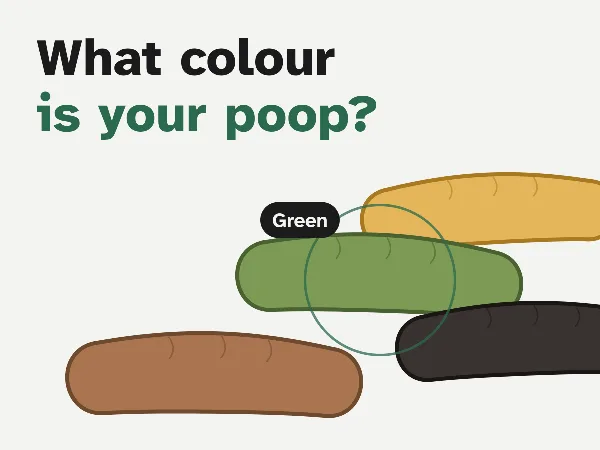 Stool and poop colour chartA stool color chart: what brown, green, yellow, orange, black, red and pale or grey poop can mean, which colours to show a doctor, and a free printable.
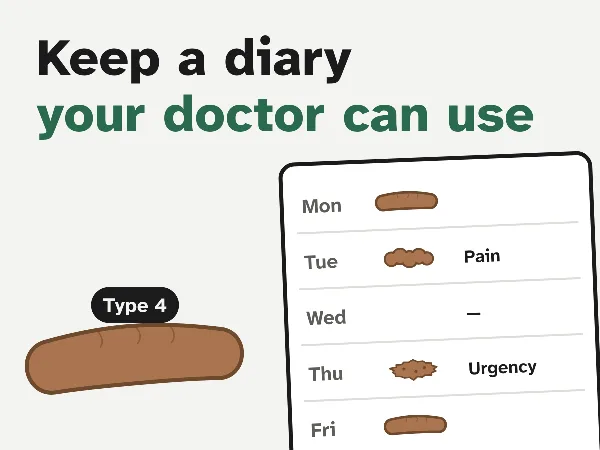 How to keep a stool diary your doctor can useWhat to write down each time you go, for how long, and how to bring it to an appointment so your doctor can read it in a minute.
 Tracking constipation on a GLP-1 medicineHow to keep a simple diary of stools, water, food and doses on a GLP-1 medicine, so you and your prescriber can see what's changing.